Powerful, Solid, Proven 4G VoLTE with MiMo Technology for Wireless Elevator and Emergency Phone Communications.

Elevator phone monitoring requires a dedicated system for hands-free, two-way communication (audio and/or text/video) to a 24/7 monitoring service that can identify the elevator’s location. Recent updates to elevator codes, such as the International Building Code (IBC) and ASME A17.1, mandate this for accessibility, especially for people with hearing or speech impairments. These systems must also operate during power outages and ensure users don’t get a busy signal.

Area of rescue (or refuge) systems require a two-way communication system that connects each designated area to a central control point, often a fire command center, and may include an automatic phone dial-out capability to an external supervising station or 911 service. These systems must comply with standards like NFPA 72, providing audible/ visible signals, battery backup, and supervision to indicate system malfunctions. Specific requirements, including monitoring and dial-out protocols, should always be confirmed with the local Authority Having Jurisdiction (AHJ).

Pool phone monitoring requires a landline or monitored cellular emergency phone, a 24/7 direct connection to emergency services, clear and accurate signage with the address and emergency numbers, and a location within 300 feet of the pool enclosure. Regular monthly testing for functionality, location identification, and call-back capability is essential.

The Clery Act:
This federal law requires colleges and universities receiving government aid to report crime statistics, outline campus safety policies, and implement procedures for notifying the campus community of significant emergencies.

Emergency Notification:
Universities must develop procedures for confirming a dangerous situation, determining who to notify, and activating their emergency notification systems to disseminate information to the community.

Accessibility:
Any emergency communications systems must be accessible to all individuals, including those with vision or hearing impairments, often adhering to the Americans with Disabilities Act (ADA) guidelines.

Parking structure emergency phone monitoring involves installing easily identifiable “blue light phones” or call stations that allow users to quickly summon help in an emergency. These systems provide a direct line to emergency services, knowing the user’s exact location. Advanced systems offer remote monitoring and management for reliability and allow for integration with overall security plans, ensuring these critical communication devices are operational when needed.

Bridge emergency phone monitoring refers to the installation and monitoring of emergency telephones, such as call boxes or two-way communication systems, on bridges to allow users to contact emergency services or bridge authorities in case of an accident or incident. This technology is often combined with bridge structural health monitoring systems that use sensors and data analysis to detect structural damage, and mass notification systems that can alert the public or emergency responders to incidents.

Rail line emergency phones in the US are monitored by the respective railroad companies’ dispatch centers, not a single national or 911 service. Each railroad company is mandated by the Federal Railroad Administration (FRA) to maintain an Emergency Notification System (ENS) for this purpose.

A telephone entry system is an access control method that allows visitors at a front door intercom to talk with residents or staff at a property before being granted entry. These systems are commonly used in gated communities, apartment buildings, office complexes, and industrial sites which require a phone line.

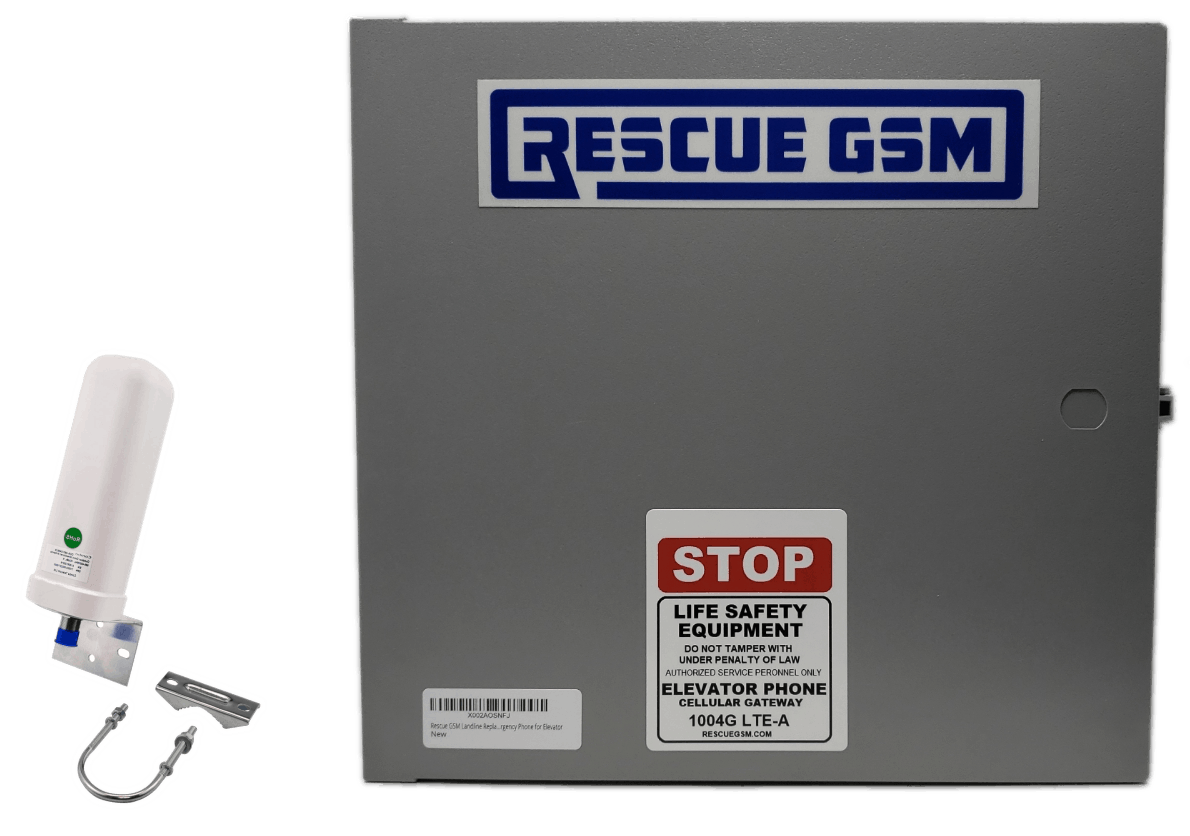
Shown with optional Comba outdoor antenna.
  • AT&T Network certified device
  • Meets ASME A17.1, Section 2.27 when used with phone line verification module
  • FCC Certified
  • PTCRB Network certified
  • Lowest Upfront Cost
  • Lowest Operating Cost with a Voice Only cellular plan
  • Save up to $1,500 per year in phone line fees.
  • The perfect elevator phone solution with Plug & Play functionality and installation.
  • Lithium-Ion battery pack with 6-Hours of stand-by time.
  • Dial Capture with Call Rerouting

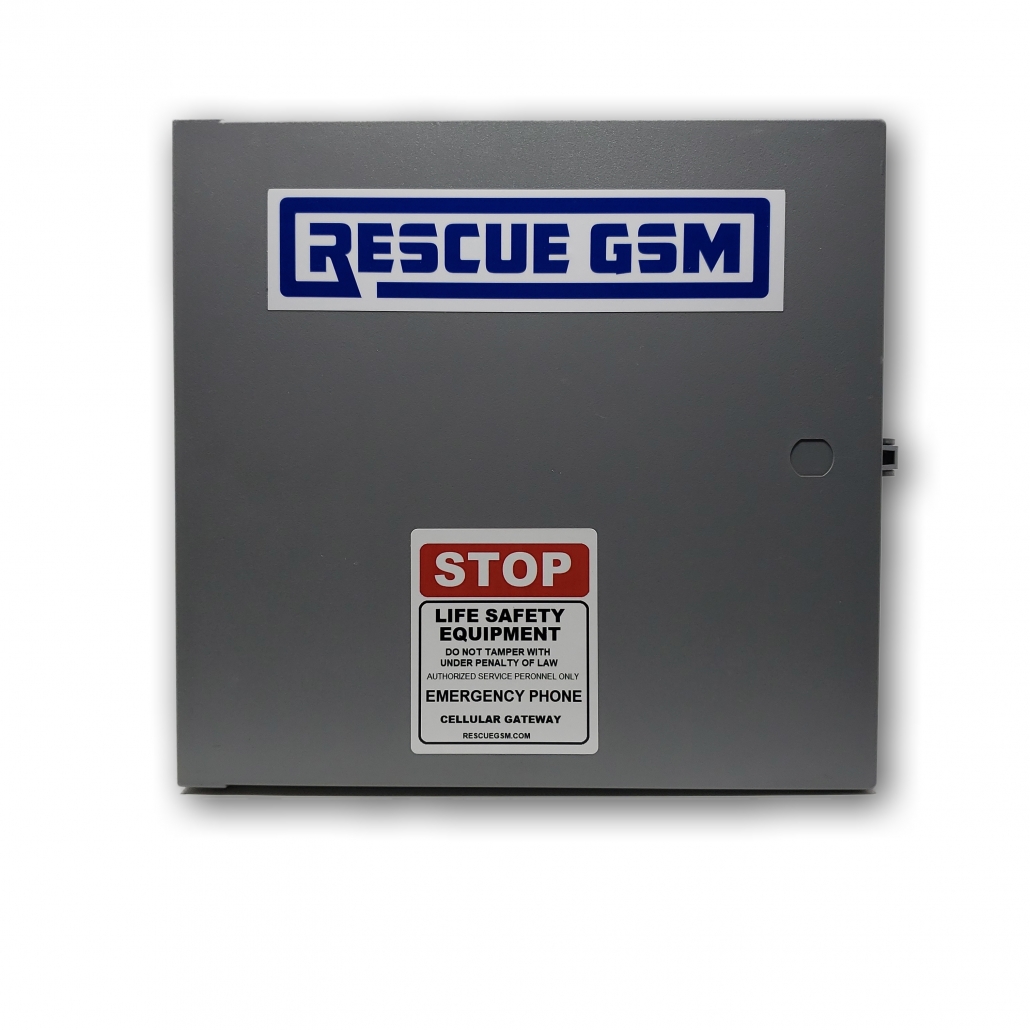
Rescue GSM launches the 4000 LTE, AT&T Certified with Call Rerouting

Also known as a wireless or cellular elevator and emergency phone adapter, the 4000 LTE gateway is a retrofit for an Analog/POTS phone line replacement. Rescue GSM works with elevators, emergency phones, Area of Refuge, 2-Way communications, bridges, pole phones, tower phones, school phones, blue light phones, campus phones, parking phones, trail phones, transit phones, industrial phones, call boxes, first aid stations, emergency stop phones, muster point phones and weatherproof phones. Rescue GSM can save facility owners thousands of dollars per year in phone company fees and will fill the void when POTS/Analog phone lines are fully dismantled.

New Arrival

RGSM-9100

Dual SIM card for redundant communication, Verizon & AT&T Certified
VoLTE and VoIP with RJ11
4G LTE Router
Comprehensive remote system monitoring
Daily Auto-Test
8-Hours, integrated UPS/Back-up battery
Internal event log
3rd Party Integrations

About Us

Rescue GSM is a manufacturer and wholesale distributor offering code compliant LTE MiMo cellular communication solutions for elevators, 2-Way/Area of Rescue and Public Safety emergency phones. Rescue GSM is a 4G VoLTE single-channel analog cellular gateway specially designed for the Life Safety and Elevator industries. It is a solution based on LTE GSM mobile networks used for an analog or POTS phone line replacement. All products are FCC, PTRSB certified and designed to meet current NFPA-72 code standards.

Contact Us

Technical Support and Administration :

1-844-384-5511

Wireless Emergency Phones

Cellular Emergency Phones

VoLTE Gateways for New Construction

An Excellent Landline Replacement Solution

Be Ready for the Final Push of Analog/POTS Phone Line Dismantlement

GSM Voice Gateways